Author: Arthur Cunningham

Navigating the Seas of Decentralized Finance: An Introduction to DeFI

Decentralized Finance, popularly known as DeFi, has become the new buzzword in the financial world. With its promise of democratizing finance and disrupting traditional financial intermediaries, it’s time we delve deeper into understanding what DeFi is and how it works.

What is DeFi?

DeFi, or Decentralized Finance, is a financial system built upon blockchain technology, particularly the Ethereum blockchain. It aims to democratize finance by eliminating intermediaries like banks and brokers, hence promoting full financial inclusion. Simply put, DeFi is about creating a decentralized financial system that is open, transparent, and accessible to everyone.

How Does DeFI Work?

DeFi applications are designed to recreate traditional financial systems in a decentralized manner. These applications use a series of smart contracts built on a blockchain. Smart contracts are self-executing contracts where the terms are written into code. These automated programs run exactly as they are set up to, without any possibility of censorship, downtime, fraud, or third-party interference.

Some popular applications of DeFi include lending platforms, decentralized exchanges (DEXs), and stablecoins.

DeFi Lending Platforms

DeFi lending platforms are one of the first and most straightforward implementations of DeFi. In these platforms, lenders contribute their funds into a liquidity pool. Borrowers then draw from this pool, following a set of pre-defined rules encoded in smart contracts.

Decentralized Exchanges (DEXs)

DEXs are trading platforms where users can trade cryptocurrencies directly, without an intermediary. They guarantee more safety than their centralized counterparts as users maintain control of their funds throughout the transaction process.

Stablecoins

Stablecoins are cryptocurrencies pegged to a stable asset, like gold or a fiat currency. They offer price stability characteristics, making them an efficient medium of exchange.

The Future of DeFi

Despite its potential, DeFi is still in its early stages. As such, it poses considerable risks such as volatility, lack of regulation, and technological vulnerabilities. But, over time, with ongoing advancements and proper regulatory measures, DeFi promises to create a truly open financial system.

In conclusion, while the world of DeFi can be complex and intimidating to navigate, it holds the potential to revolutionize our financial systems. It is undoubtedly a fascinating space that demands our attention as we stride into the future of finance. Who knows, with DeFi, we could be on the brink of a financial paradigm shift.

Demystifying Decentralized Finance (DeFi): A Comprehensive Overview

Decentralized Finance, commonly referred to as DeFi, has become a trending topic in the financial and technology sectors. This burgeoning industry strives to democratize access to financial services using blockchain technology. The attention surrounding DeFi is hard to ignore, making it crucial to comprehend its components and influence on the financial landscape.

Introduction to DeFi

Decentralized Finance represents the merger of traditional banking services with blockchain technology. It aims to make financial services more accessible, transparent, and immutable, bypassing middlemen such as banks or financial institutions within the process. Rooted in the principles of blockchain and cryptocurrencies, DeFi has redefined how we perceive and interact with financial systems.

Core Components of DeFi

Smart Contracts and DApps

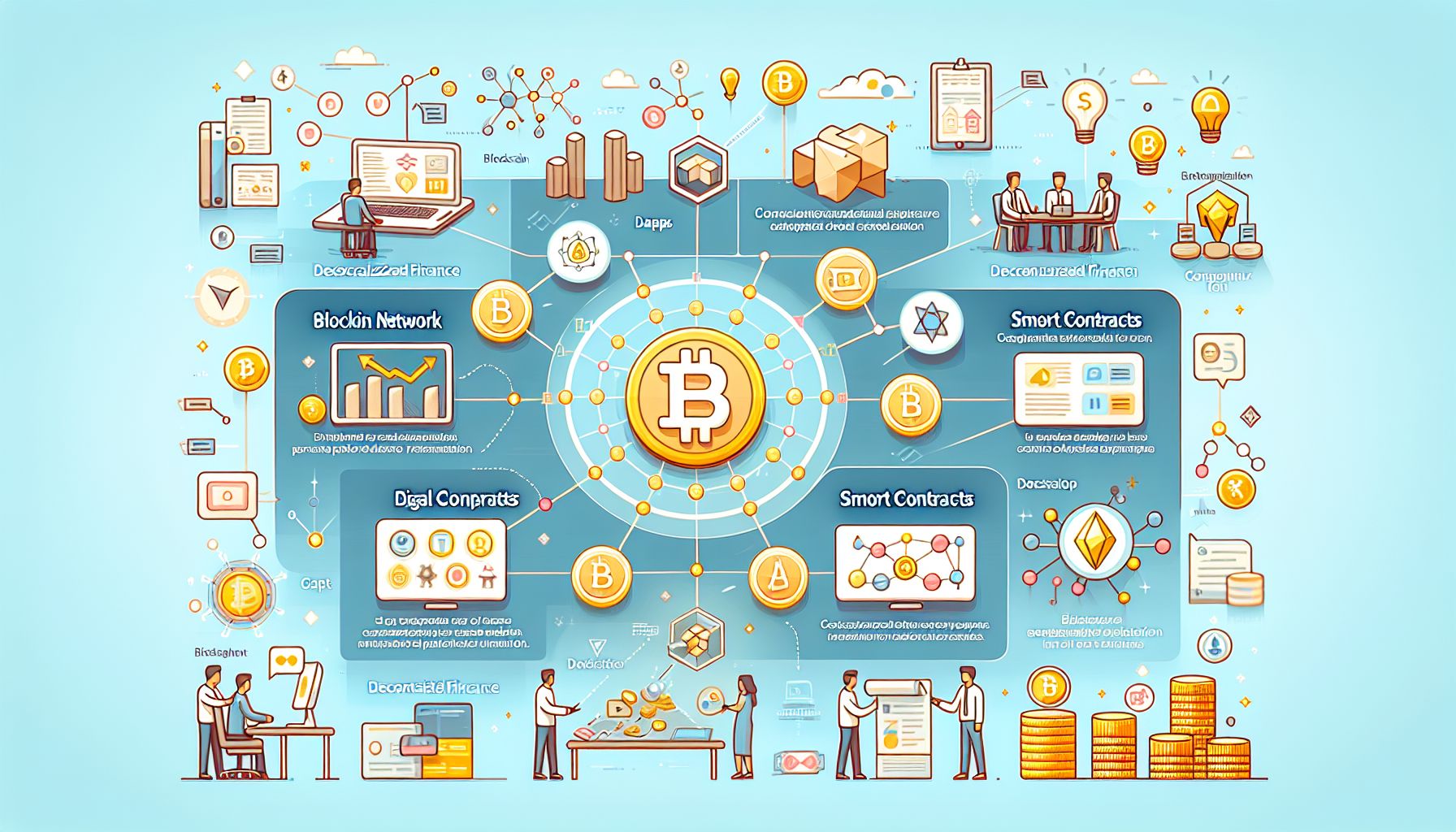
The backbone of DeFi is smart contracts, programmable codes running on the blockchain that facilitate and verify transactions among parties. These contracts serve as the foundation for Decentralized Applications (DApps) which offer services like lending and borrowing, asset swapping, yield farming, and insurance.

Governance Tokens

Another significant component in the DeFi ecosystem is Governance tokens. These tokens give holders the power to influence the development direction of the DeFi project, making them active participants in the platform’s decision-making process.

Liquidity Pools

Liquidity pools are the heart of various DeFi services, particularly in Decentralized Exchanges (DEXs). They consist of a reservoir of tokens locked into a smart contract, providing liquidity for transactions.

Advantages and Challenges of DeFi

DeFi brings about immense freedoms by facilitating universal access to financial services, enhancing transparency and eliminating intermediaries. However, the more significant potential of DeFi also implies larger risks given the market’s immaturity. Technical exploits and fraudulent activities have surfaced as challenges confronting the DeFi space.

Wrapping Up

In conclusion, Decentralized Finance (DeFi) is an emerging paradigm that holds the promise of democratizing access to financial services. While it carries unique advantages, the nascent industry also abounds with challenges. As we navigate into this exciting territory, it becomes essential to understand the fundamentals, dynamics, and significant components of DeFi. The promise and potential are fascinating, yet as participants, we must tread the path with enlightening knowledge and cautious excitement.

Undoubtedly, DeFi has initiated a financial revolution, further strengthening the bridge between traditional finance and the digital ecosystem. The key lies in continuous learning and adapting to the zeitgeist of this groundbreaking innovation.

Unlocking Financial Freedom: An Introduction to DeFi

Introduction

Historically, financial services have been heavily centralized, with banks and other high-powered institutions serving as gatekeepers to access. However, the emergence of blockchain technology has unlocked a new paradigm, termed Decentralized Finance (DeFi). This innovative model promises to shake up the traditional banking sector, opening the door to financial services for everyone, regardless of geographic location or economic status.

Understanding Decentralized Finance(DeFi)

DeFi is a system by which financial products become available on a public decentralized blockchain network. They make use of smart contracts on blockchains, leveraging their transparency, immutability, and security. With DeFi, individuals can borrow, lend, trade, invest, and insure their assets all on a peer-to-peer basis, without the need for any intermediaries.

DeFi has gained significant popularity within a short period, largely because of its democratization of finance. It aligns with the original vision of cryptocurrencies – creating a financial system that is open, transparent, and equitable.

The Promise of DeFi

One of the most appealing aspects of DeFi is permissionless banking. Any individual or business with an Internet connection can carry out transactions or access services such as savings, loans, and insurance. This can revolutionize finance in regions where banking services are either inefficient or unavailable.

Moreover, decentralization avoids the problems of a single point of failure. Unlike centralized banking, where an attack or failure at a critical point can paralyze the entire system, DeFi operates seamlessly as it does not rely on central authorities.

DeFi also introduces unprecedented transparency. Every transaction is recorded on a public blockchain for anyone to inspect and investigate, thereby reducing the chance of fraud and corruption.

The Challenges Ahead

However, despite these advantages, DeFi is not without its challenges. The technology is still in its early stages and is yet to mature. The complexities and inherent problems of smart contracts, like bugs and scalability issues, could lead to huge financial losses. Also, regulatory uncertainties persist, primarily due to the absence of intermediaries.

Summary

DeFi holds great promise to democratize access to financial services, bringing a new level of transparency, security, and inclusivity. Its potential to usher in a new paradigm of permissionless and decentralised financial services makes it a revolution to watch. Despite the latency of technical and regulatory issues, with time and technological advancement, these hurdles are likely to be surpassed, making DeFi the key to unlocking financial freedom for billions of people.

The Emergence of DeFi: A Game Changer in the Finance Industry

The decentralized finance or DeFi movement is undeniably one of the hottest topics recently in the blockchain space. This burgeoning sector aims to create an entirely decentralized financial ecosystem — an ambitious venture that could potentially reshape our traditional financial systems.

DeFi: Defining the Concept

DeFi, or decentralized finance, is a blockchain-based form of finance that does not rely on central financial intermediaries such as banks, brokers, or exchanges. Instead, it utilizes smart contracts on blockchains, particularly Ethereum. Traditional financial transactions like lending, borrowing, derivatives, insurance, and trading can be performed without any intermediaries in the DeFi world.

The Potential of DeFi in Financial Inclusion

One of the most notable aspects of DeFi is its potential to create a more inclusive financial system. Traditional financial institutions often exclude a huge portion of the world’s population due to various factors. DeFi systems, on the other hand, are open to all. With just a smartphone and internet connection, anyone can access and interact with these decentralized platforms, thereby fostering greater financial inclusion.

Tackling Imperfections of DeFi

However, the DeFi movement is not without its fair share of challenges. Many DeFi platforms are still in their experimental stages. Its decentralization nature also makes it a high-risk investment due to its openness and absence of regulation. Furthermore, the existence of so-called “rug pulls” and scam tokens create an environment that mandates users to tread cautiously.

The Future of DeFi: A Paradigm Shift?

Undoubtedly, DeFi has brought a revolutionary concept that challenges the strongholds of traditional finance institutions. Its decentralized nature promises financial inclusion and more freedom for users. However, it is still a long journey. DeFi today is where the Internet was during the early ’90s — full of promise, but with a long way to go.

In Summary

The DeFi revolution in the blockchain space is only beginning. Even with the challenges and risks it currently faces, it offers a ray of potential and hope for a more inclusive and egalitarian financial world. While it is difficult to predict the future with absolute certainty, one thing is clear: DeFi is more than just hype; it’s a game changer. As we tread this rising wave of DeFi, it is incumbent upon us to remain vigilant, adaptive, and ready for whatever the future may hold in the realm of decentralized finance.

Embracing the Decentralized Finance (DeFi) Revolution

Decentralized Finance, commonly known as DeFi, is taking the world by storm. This shift towards a more open, transparent, efficient, and non-discriminatory financial system is challenging traditional finance’s status quo.

Introduction to Decentralized Finance (DeFi)

DeFi refers to the use of blockchain, digital assets, and smart contracts in the financial segment. It’s a financial system built on public blockchains like Ethereum and Bitcoin, aiming to make financial services more accessible and less dependent on central authorities.

The Rise of DeFi

DeFi presents an extraordinary approach to the financial services industry by promising to be easily accessible, open, programmable, and frictionless. It eliminates the need for intermediaries such as banks and financial institutions, allowing peer-to-peer transactions in a trustless environment.

DeFi applications offer services like lending and borrowing platforms, decentralized exchanges (DEXs), asset tokenization, yield farming, insurance, and prediction markets. The adoption of DeFi could lead to significantly lower costs, improved transaction speeds, increased openness and transparency, and strengthened operational efficiencies.

Key Components of DeFi

1. Trustless and Transparent:

DeFi’s public infrastructure ensures transparency, and its sophisticated encryption ensures transactional trust and secure data exchange.

2. Openness:

Anyone can access DeFi applications, anywhere, anytime. You only need an internet connection to make transactions or access services.

3. Decentralization:

Digitized, distributed ledgers eliminate the need for intermediaries, reducing transaction costs and frictions.

4. Interoperability:

DeFi applications on the same blockchain can seamlessly interact with each other, creating integrated financial services ecosystems.

The Heed to Caution

While DeFi offers revolutionary opportunities, it also comes with unique challenges and risks. These include smart contract bugs, privacy issues, scalability problems, and regulatory concerns. Thus, a balanced approach to DeFi adoption—prioritizing risk management, enhancing system robustness, and adopting appropriate regulatory measures—is imperative.

Conclusion: The Future of DeFi

The DeFi revolution promises to democratize finance and provide universal access to financial services. It has enormous potential to open up economic opportunities to individuals around the world, particularly those currently underserved by traditional financial systems. However, harnessing DeFi’s potential while managing its risks should be seen as a collective responsibility. As we move forward, the adoption and development of DeFi should be a pursuit of balance between innovation and security.

In the rapidly evolving DeFi landscape, one thing is certain: DeFi has stepped out of the shadows of the financial services industry, and it’s here to stay.

DeFi: The Future of Finance

DeFi or Decentralized Finance is disrupting the traditional financial system, offering a myriad of new possibilities. But what is DeFi and how does it work? We will uncover the details and implications of this revolutionary concept in this post.

Introduction to DeFi

In the most elementary terms, DeFi refers to financial services that operate on blockchain technology, typically without the need for intermediaries. Unlike traditional banks or insurance companies, DeFi applications allow anyone with an internet connection to access these financial services. This democratization of finance offers significant advantages that can potentially revolutionize the economic landscape.

The Scope and Functioning of DeFi

DeFi encompasses a broad range of financial activities. These could include lending and borrowing platforms, asset trading, derivatives, payment systems, insurance, and even stable coins and prediction markets.

DeFi organizes financial operations on smart contracts, which are self-executing contracts with pre-set terms and regulations. These smart contracts operate on blockchain networks, mainly Ethereum, ensuring secure transactions and mitigating the risk of fraud.

Comparative Advantages of DeFi

DeFi applications have several unique advantages over their traditional counterparts. Firstly, they offer financial inclusion to those who might be excluded from traditional banking, such as the unbanked population of the world. Secondly, DeFi operates 24/7, unbounded by restrictive business hours. Lastly, the transparency inherent in blockchain technology implies that DeFi transactions are open and verifiable, ensuring a high degree of trust.

However, like all financial operations, DeFi isn’t without its risks. The smart contract-based system is relatively new and unproven. Additionally, the lack of regulations and potential for high volatility can lead to significant financial losses for the unsuspecting investor.

Conclusion: The Future of DeFi

DeFi is still in its nascent stages, yet it presents a considerable potential to remodel the financial sector. While the risks involved in this field are understandably higher than traditional finance, the opportunities it offers – financial inclusivity, efficient operations, and transparent dealings – cannot be overlooked.

In conclusion, DeFi represents the futuristic approach towards democratizing finance. Although its adoption is currently challenged by regulatory barriers and technological complexity, its disruptive potential ensures that DeFi will continue to be an exciting area to watch in the financial industry.

DeFi: The Future of Financial Inclusion

Almost three billion people in the world do not have access to financial services. That means no loans, no insurance, no secure ways to save money. But Decentralized Finance (DeFi) could change that, bringing a vital financial system to all corners of the globe.

Introduction

DeFi, a radical reimagining of traditional financial models, leverages blockchain technology to eliminate intermediaries in financial transactions. By doing this, DeFi aims to create a more efficient, accessible, and transparent financial system. The potential benefits are huge, not least for those currently unbanked or underbanked.

Body

The beauty of DeFi is that it operates on public blockchains, fundamentally open and accessible systems. Anyone with an internet connection can access the global financial market through DeFi platforms. Notably, there are no gatekeepers. Unlike traditional financial systems, where your access can be blocked or your funds seized, with DeFi, you have complete control over your assets.

Smart contracts are the basis of DeFi. These are self-executing contracts with the agreement directly coded onto the blockchain. This eliminates the need for an intermediary, reducing costs and speeding up transactions. Moreover, with everything transparently recorded on the blockchain, there’s much less room for fraud or corruption.

DeFi also introduces new ways of generating income. In traditional finance, very few people could make money through strategies like market making or arbitrage. It required lots of resources and complex infrastructure. But with DeFi, every participant could do it, thanks to overcollaterized lending and yield farming.

Summary

However, the world of DeFi is not without its challenges. It’s a decidedly complex area with much jargon and complex concepts. This could intimidate the average user and slow adoption. Plus, there are the risks. As with all investments, there’s a chance of loss. And then there are the security issues. If smart contract is flawed, or if an external hacker attacks, who is liable for any losses?

Despite the challenges, DeFi stands to be a revolutionary development in finance. By enabling greater access, efficiency, and transparency, DeFi can extend the financial system to underserved populations worldwide. Although it’s relatively early days, the potential of DeFi can’t be denied – it could very well bring about the future of financial inclusion.

Decentralized Finance (DeFi)– Unleashing The Power of Blockchain in The Financial Industry

In the past decade, the financial market has experienced a significant shift, an extraordinary evolution from traditional methods to the integration of advanced technologies. One compelling advancement is the rise of Decentralized Finance (DeFi), the fusion of conventional banking services with decentralized technologies such as blockchain.

What is DeFi?

Decentralized Finance (DeFi) is an open and global financial system built for the internet age – an age where people are moving past outdated systems and leveraging the power of cutting-edge technology. DeFi is all about creating an inclusive financial system where everyone has access to financial services without the need for a centralized authority like a bank or a government.

The rise of DeFi

Blockchain has been the driving force behind the monumental growth of DeFi, emitting a strong promise of accessibility, inclusivity, and financial transparency. While the traditional financial system remains crippled by bureaucracy, DeFi applications (dApps) have been keen to build open-source, permissionless, and transparent financial service ecosystems.

Applications such as Compound, MakerDAO, and Uniswap are transforming the DeFi space by offering services like lending, borrowing, and trading on decentralized exchanges (DEXs). Furthermore, decentralized prediction markets and synthetic assets are introducing a new wave of financial innovation.

Why is DeFi pivotal?

DeFi aims to offer a fully decentralized financial system where intermediaries like banks become obsolete. It leverages smart contract technology, primarily on Ethereum, to replace intermediaries with automated systems. This provides a higher level of efficiency, direct peer-to-peer transactions, and ultimately, a cheaper, faster, and more inclusive financial system.

DeFi participants can earn interest on their assets, take out loans, exchange different cryptocurrencies, and even buy insurance. All of these operations are accessible to anyone, regardless of their location.

In conclusion

DeFi is quickly becoming the bedrock of the new financial order. It holds the potential to democratize finance by putting the power back in the hands of the people, facilitating ease of transactions, and unlocking a plethora of financial services to all. However, despite its numerous benefits, it is still in the nascent stage, and significant steps need to be taken to ensure its security, sustainability, and mass adoption.

Embarking on the DeFi journey means embracing the future of finance – a future where financial transactions are as easy as sending an email, inclusivity is the norm, and everyone can access a wealth of financial services from their mobile device. Indeed, DeFi seems set to transform our interaction with money fundamentally.

Indeed, the rise of DeFi is nothing short of a financial revolution, and we are just getting started.

Unraveling Decentralized Finance: The Power of DeFi

Decentralized finance, or DeFi for short, has been making waves in the financial world and has surged massively in popularity over the past few years. With its growth set to continue in the foreseeable future, it is ideal to understand why DeFi is gaining momentum and how it is transforming our traditional financial systems.

What is DeFi?

In simple terms, DeFi (Decentralized Finance) is an ecosystem of financial applications that are built on blockchain networks. Utilizing smart contracts, DeFi seeks to remove intermediaries, such as banks, in financial transactions, thereby enabling a seamless and non-custodial financial environment.

Often built on Ethereum, arguably the most well-known blockchain platform for DeFi applications, these ecosystem permits users to be in full control of their assets and financial decisions. Yet, Ethereum is not the only player in the DeFi sector. Other platforms such as Binance Smart Chain, Polkadot and Cardano, are also contributing to the growing DeFi scene, further fostering an inclusive financial landscape.

The Allure of DeFi

The boundless potential of DeFi stems mainly from its core principles – decentralization, transparency, and accessibility. Being decentralized, DeFi relies solely on code and algorithms, bypassing the need for a central authority. This creates a trustless environment where users can interact directly, without needing to trust a middleman.

On top of that, DeFi’s transparency is unparalleled. Every transaction on the blockchain is open for public viewing, thus minimizing fraudulent activities. Moreover, DeFi relishes on inclusivity, making financial services accessible globally, even to the unbanked population.

The diverse possibilities of DeFi applications is another appeal. From stablecoins, decentralized exchanges, lending and borrowing platforms, to yield farming and liquidity mining, DeFi caters to a variety of use-cases that our current financial system fails to offer.

Embracing the DeFi Revolution

Despite its potential, it’s important to note that DeFi also has certain risks including smart contract vulnerabilities and scalability issues. Nevertheless, as with any technology, these challenges can be mitigated as the industry evolves and matures.

Undeniably, DeFi has a transformative potential. Its rise signals a shift to a more open and efficient financial system, where individuals have the authority to manage their finances. As we move towards an increasingly digitized and interconnected world, the DeFi revolution is not just an option, it’s an inevitability.

In summary, DeFi is a powerful tool for financial freedom and inclusion, providing a decentralized, transparent, and accessible alternative to traditional finance. As individuals and institutions wake up to its immense potential, the DeFi revolution is surely upon us.

Unraveling the Potential of Liquidity Mining in DeFi Ecosystem

The decentralized finance (DeFi) space has been a hive of activity, demonstrating the immense potential of blockchain technology to disrupt traditional financial systems. Among the numerous innovations that define this sector, liquidity mining has emerged as a cornerstone that supports the expansive growth of DeFi platforms. In this article, we delve into what liquidity mining is and what it means for the future of decentralized finance.

A Deep Dive into Liquidity Mining

Liquidity mining is a process whereby users, known as liquidity providers (LPs), supply digital assets to liquidity pools on DeFi platforms in exchange for rewards. These rewards typically come in the form of tokens, which often include the platform’s native token and a share of the trading fees generated by the pool’s activity. The premise is simple yet powerful: incentivize users to add their funds to a pool, thus providing the necessary liquidity for others to trade, borrow, or lend assets without large price swings or delays.

The rise of liquidity mining can be attributed to numerous factors. It presents an opportunity for LPs to earn passive income on their holdings, which might otherwise remain idle in a wallet or an exchange. The more liquidity a pool has, the more appealing and reliable the platform becomes for its users. This symbiotic relationship between LPs and DeFi platforms has catalyzed a remarkable influx of funds into the ecosystem.

Another critical aspect of liquidity mining is that it has opened doors to a more democratic participation in the DeFi governance processes. Many DeFi platforms issue governance tokens as rewards, which grant voting rights on proposals that shape the future of the platform. This empowers users to have a say in crucial decisions, aligning the interests of stakeholders across the board.

The Impact and Future of Liquidity Mining

While liquidity mining offers multiple benefits, it is also accompanied by certain risks. Impermanent loss is a significant concern for LPs, which occurs when the price of deposited assets changes compared to when they were added to the pool. Moreover, the sustainability of high reward yields is often questioned as the initial influx of liquidity can lead to a subsequent decrease in reward rates.

In summary, liquidity mining stands as a transformative component of the DeFi ecosystem. It facilitates increased liquidity, enabling platforms to offer a better user experience while fostering a more inclusive financial system. As with any financial innovation, it is essential to balance optimism with prudent risk management. Nonetheless, the future is bright for liquidity mining, as it continues to play a pivotal role in shaping the DeFi landscape, making it more robust, accessible, and aligned with the ethos of decentralization.