
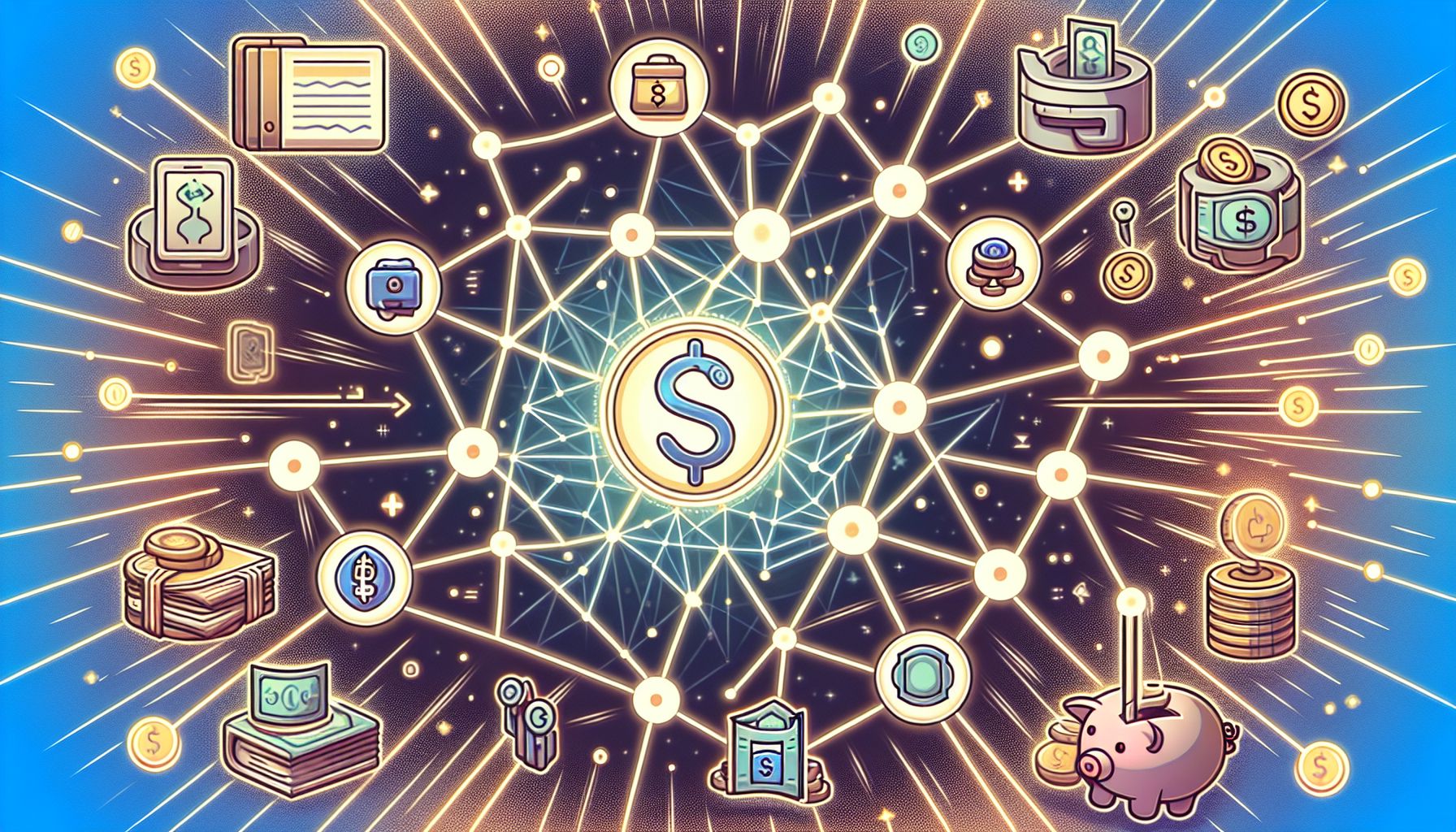
Unraveling Decentralized Finance: The Power of DeFi
Decentralized finance, or DeFi for short, has been making waves in the financial world and has surged massively in popularity over the past few years. With its growth set to continue in the foreseeable future, it is ideal to understand why DeFi is gaining momentum and how it is transforming our traditional financial systems.
What is DeFi?
In simple terms, DeFi (Decentralized Finance) is an ecosystem of financial applications that are built on blockchain networks. Utilizing smart contracts, DeFi seeks to remove intermediaries, such as banks, in financial transactions, thereby enabling a seamless and non-custodial financial environment.
Often built on Ethereum, arguably the most well-known blockchain platform for DeFi applications, these ecosystem permits users to be in full control of their assets and financial decisions. Yet, Ethereum is not the only player in the DeFi sector. Other platforms such as Binance Smart Chain, Polkadot and Cardano, are also contributing to the growing DeFi scene, further fostering an inclusive financial landscape.
The Allure of DeFi
The boundless potential of DeFi stems mainly from its core principles – decentralization, transparency, and accessibility. Being decentralized, DeFi relies solely on code and algorithms, bypassing the need for a central authority. This creates a trustless environment where users can interact directly, without needing to trust a middleman.
On top of that, DeFi’s transparency is unparalleled. Every transaction on the blockchain is open for public viewing, thus minimizing fraudulent activities. Moreover, DeFi relishes on inclusivity, making financial services accessible globally, even to the unbanked population.
The diverse possibilities of DeFi applications is another appeal. From stablecoins, decentralized exchanges, lending and borrowing platforms, to yield farming and liquidity mining, DeFi caters to a variety of use-cases that our current financial system fails to offer.
Embracing the DeFi Revolution
Despite its potential, it’s important to note that DeFi also has certain risks including smart contract vulnerabilities and scalability issues. Nevertheless, as with any technology, these challenges can be mitigated as the industry evolves and matures.
Undeniably, DeFi has a transformative potential. Its rise signals a shift to a more open and efficient financial system, where individuals have the authority to manage their finances. As we move towards an increasingly digitized and interconnected world, the DeFi revolution is not just an option, it’s an inevitability.
In summary, DeFi is a powerful tool for financial freedom and inclusion, providing a decentralized, transparent, and accessible alternative to traditional finance. As individuals and institutions wake up to its immense potential, the DeFi revolution is surely upon us.