
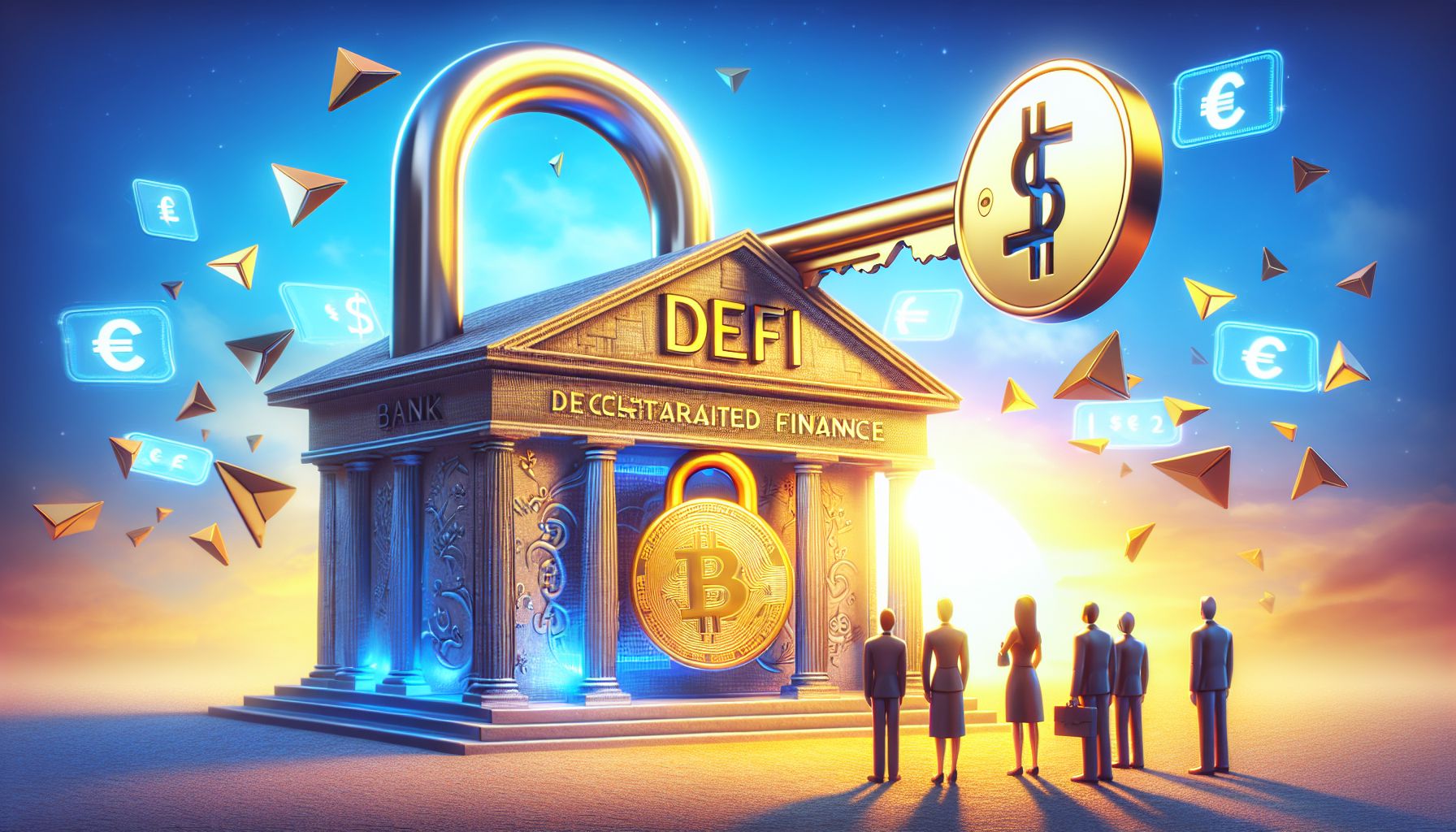
Unleashing Financial Freedom: The Rise of DeFi
The world of finance as we know it is undergoing a transformative shift, a disruptive wave heralding an age of decentralized finance, commonly referred to as DeFi. This innovation is rapidly reshaping how individuals interact with money, investment, lending, and more, offering a permissionless and open alternative to traditional financial systems.
Introduction
Decentralized Finance, or DeFi, is a term that has been buzzing in the ears of the tech and financial communities in recent years. It stands for a financial ecosystem that is built on blockchain technology and operates without the need for conventional financial intermediaries such as banks, brokers, or insurers. DeFi platforms give users control over their finances through smart contracts, which are self-executing contracts with the terms directly written into code.
Body
At the heart of DeFi’s allure is the promise of empowerment. By leveraging blockchain technology, DeFi applications offer a level of transparency, security, and accessibility that is unheard of in traditional finance. These platforms enable anyone with an Internet connection to access services such as borrowing, lending, trading, and earning interest on their assets without going through a central authority.
One of the flagship features of DeFi is the ability to borrow or lend assets and earn interest using protocols like Aave or Compound. These platforms use over-collateralization to secure loans, eliminating the need for credit checks and providing a seamless borrowing experience. Moreover, automated market makers (AMMs) like Uniswap and Curve have revolutionized trading by allowing for decentralized exchange of assets without the need for order books.
The composability of DeFi is another groundbreaking aspect; it’s often described as “money legos.” Each protocol can interact with another, which means that new DeFi applications can build upon existing ones, creating a layered and sophisticated financial network.
Despite its numerous advantages, DeFi is not without its challenges. It’s still in its infancy and has issues such as smart contract vulnerabilities, scalability limitations, and a steep learning curve for new users that need to be addressed. As the industry matures, these challenges are becoming the focal point for developers and the community at large.
Summary
DeFi is setting the stage for a revolution in how we think about and interact with financial services. It offers a permissionless, inclusive, and efficient alternative to the conventional system, empowering users globally. As we navigate through its evolution, DeFi holds the potential to democratize finance, providing equal opportunities for all to engage in the global economy. Although there are hurdles to overcome, the future of DeFi shines bright, promising a world where financial control is back in the hands of the people.